
April 18-20 | Scottsdale, AZ

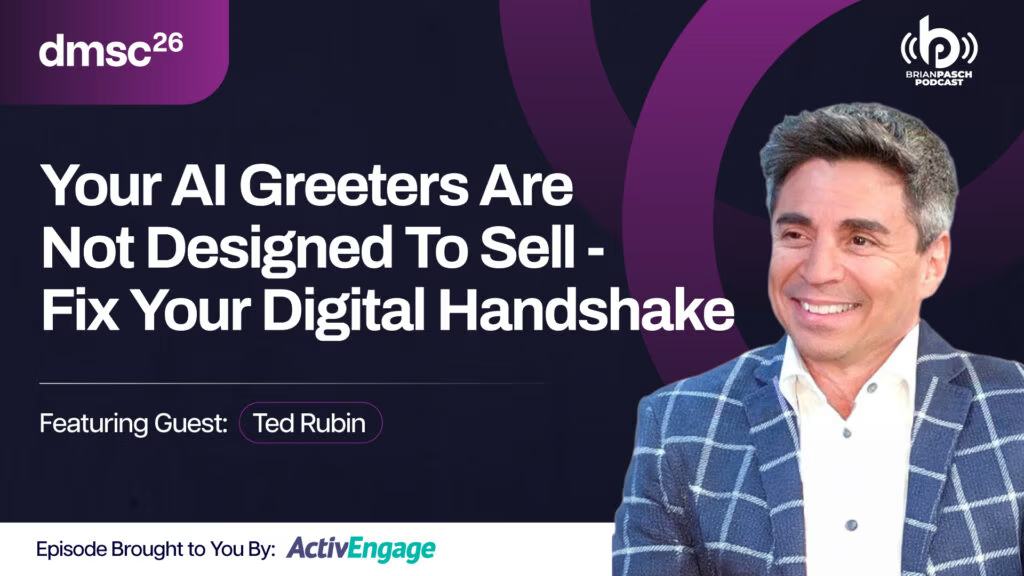
In this thought-provoking episode, Brian Pasch and Ted Rubin challenge the assumption that AI chat tools are improving dealership performance. Drawing on real-world experience and data, they explain why the “first digital handshake” has shifted online—and why most AI-driven interactions fail to build trust or drive sales. While AI excels at delivering information, it lacks the emotional intelligence, authority, and connection required to convert shoppers into buyers. This conversation explores the critical difference between answering questions and creating relationships, and why dealers who prioritize human-led conversations—supported by AI, not replaced by it—will outperform in today’s competitive market.
In this episode, Brian Pasch sits down with Ted Rubin of ActivEngage to explore one of the most critical—and misunderstood—elements of automotive digital retailing: the first digital handshake. As dealers adopt more AI-powered chat tools, the conversation challenges whether automation is helping or hurting website conversion rates, customer trust, and ultimately, vehicle sales.
Today’s dealership journey starts online, not in the showroom. That first interaction—when a shopper engages via website chat—has effectively replaced the in-store greeting. Ted emphasizes that this moment is no longer just about answering questions; it’s about building trust. With studies showing that trust is the top factor in purchase decisions, dealers must treat chat conversations as relationship-building opportunities, not just data exchanges.
AI excels at handling structured tasks—like vehicle searches, feature comparisons, and service scheduling. However, when a customer initiates a conversation, they are often seeking reassurance, expertise, and connection. Ted draws a clear line: AI is effective for utility, but human interaction is essential for sales. Shoppers want confidence in who they’re buying from, not just information about what they’re buying.
While AI can deliver fast answers, it lacks emotional intelligence, authority, and the ability to create meaningful connections. The best automotive sales professionals succeed because they establish credibility and guide customers through decisions. Without that human element, dealerships risk turning high-intent shoppers into missed opportunities by offering only transactional responses instead of consultative engagement.
One of the biggest misconceptions discussed is cost savings. Many dealers assume AI chat is significantly cheaper, but Ted explains that enterprise-grade AI solutions are often priced similarly—or higher—than live chat services. The real question isn’t cost, but ROI: are dealers converting more website visitors into showroom appointments and sales, or simply reducing expenses while losing revenue?
Dealers are often sold on AI’s “always-on” availability, but human-powered chat solutions have already been operating 24/7 for years. The differentiator is no longer availability—it’s effectiveness. A live, well-trained agent who can build rapport and guide the conversation will outperform automated responses, even if both are available around the clock.
Generating leads is no longer the primary challenge for dealerships. With abundant data and marketing channels, most dealers already have strong website traffic. The real opportunity lies in converting those leads more effectively. Early-stage conversations—especially chat interactions—play a critical role in moving customers deeper into the sales funnel and increasing close rates.
Despite advancements in AI and automation, the foundation of automotive sales hasn’t changed: people buy from people they trust. The most successful sales experiences are built on credibility, responsiveness, and genuine engagement. Removing the human element from early interactions can weaken that trust and make it harder to close deals once customers arrive at the dealership.
The conversation ultimately points to a hybrid approach. AI should be used to enhance efficiency—handling data requests and simple tasks—while human agents take over when relationship-building is required. Dealers who clearly define when to use automation versus human interaction will be better positioned to maximize both customer experience and profitability.
Brian and Ted close by previewing the upcoming Digital Marketing Strategies Conference in Scottsdale, where topics like AI adoption, website conversion optimization, and customer communication strategies will take center stage. Dealers attending will gain actionable insights on how to refine their tech stack and improve performance across their digital retailing ecosystem.
